
Oral Bacteria Management for Healthy Gums
 Due to oral bacteria mismanagement 47% of American adults have chronic gum disease known as periodontitis. Tens of millions more have gingivitis. Are you one of them? You can have gum disease and not know it because the disease is hard to see and because it doesn’t hurt until later stages.
So many people have gum disease because it is so hard to treat. The disease starts with biofilms (oral bacterial communities) that build up beneath the gum line where they can be impossible to reach with toothbrushes, floss, or mouthwash. Even dental professionals are unable to completely clean biofilm deep below the gums. Antibiotics may help temporarily, but the bacteria frequently return or build up resistances to the antibiotics and the disease cycle continues.
If you struggle against periodontal disease, it’s time to consider a better oral bacteria management technique – a gum disease treatment that actually reduces the bacterial infections and keeps them in check over time. With the Perio Tray®, you can effectively deliver medication to modify and reduce biofilms on a daily basis for better, long-term disease management. Managing the micro-environment (oral bacteria) is key to healthy gums, and delivering the medicine is now easier and more efficient with the thanks to Perio Protect.
What are Biofilms?
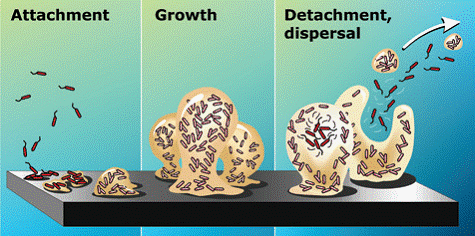
Biofilms are simply communities or colonies of bacteria. The growth of biofilm within periodontal pockets (the space between the tooth and gums) occurs in three stages. After the first stage of attachment, the bacterial cells begin to form a colony with a slimy protective covering, hence the term “biofilm” or living film. In the second stage, the colony grows. Infections in the gums may result, causing bleeding and inflammation. In the most advanced stage of biofilm growth, clumps of bacteria detach to form new communities which can cause new infections. If left untreated, these infections can lead to the loss of bone supporting your teeth and thus to tooth loss. The infectious bacteria may also spread into your blood stream and contribute to systemic inflammation and diseases.
Systemic Diseases Linked to Oral Bacteria
© MSU Center for Biofilm Engineering; used with permission.
The theories linking oral bacteria to systemic diseases describe the mouth as a portal for bacteria to spread to other areas of your body. Just as bacterial clumps break free from the biofilms to form new colonies in the mouth, these bacterial clumps can have a “seeding” effect into the bloodstream. When biofilm infections cause inflammation and ulcerations (sores or lesions) in gum tissue, the small openings in the gum tissue can allow bacteria to pass from the gums into the blood stream, and once this occurs, the effects of the oral bacteria could be damaging to other areas of your body. Research has established associations between oral bacteria and the following systemic diseases:
Type 2 Diabetes
Managing gum disease has a positive effect on diabetes, helping to control the effects of diabetes. In fact, diabetic patients with gum disease often have higher blood sugar levels than diabetic patients with healthier gums, and they often require more medication to manage their diabetes. In studies when the gum disease was treated, patients with diabetes had decreased blood sugar levels that stayed lower for three months.
Heart Disease, Stroke, Blood Clots, Chronic Inflammation, and Atherosclerosis
Oral bacteria entering the body may cause inflammation in the arteries. The inflammatory response combined with fat deposits can lead to a buildup of plaque, which clogs blood flow. As blood platelets build up and the blood flow continues to back up, blood clots can form, which can lead to heart attacks, strokes, atherosclerosis (hardening of the arteries), and other dangerous health conditions.
Respiratory Disease
Bacteria present in gum disease have been located in lung tissue of patients with lung abscesses, indicating that there may be a correlation between the two.
Preterm and Low Birth Weight Babies
Pregnant women with gum disease have a 57% incidence of low birth weight babies and 50% greater incidence of preterm deliveries. Researchers continue to examine these correlations to determine the relationship between gum disease and pregnancy.
Alzheimer’s Disease
The bacteria associated with Alzheimer’s Disease have been isolated in the periodontal pockets and along the nerves from the teeth to the brain tissue. When these bacteria are introduced into brain cultures, beta amyloid is formed, which is the substance associated with Alzheimer’s Diseases.
Colorectal Cancer
A common anaerobic bacteria involved in periodontal disease has been identified as a driver in colorectal cancer.
Fighting Gum Disease May Help Systemic Diseases
Patients suffering from any of these systemic diseases should discuss ways to protect their health with their doctor. They should also talk to their dentist because taking care of oral health contributes to better general health.
Ask your dentist about the Perio Tray from Perio Protect. When the Perio Tray is used to deliver hydrogen peroxide deep below the gums, research shows it helps reduce biofilm, bleeding, and pocket depths. The peroxide releases oxygen, killing some oral bacteria but also causing a change in the micro environment of the periodontal pocket so that it is harder for the infectious bacteria to repopulate. When used on a daily basis, patients can better manage gum disease.

